COSTEP Showcases Río South Texas Region at Team Texas Summit
August 26, 2026
COSTEP and Rio South Texas Region Strengthen International Connections at the 2026 Transatlantic Business & Investment Conference
September 1, 2026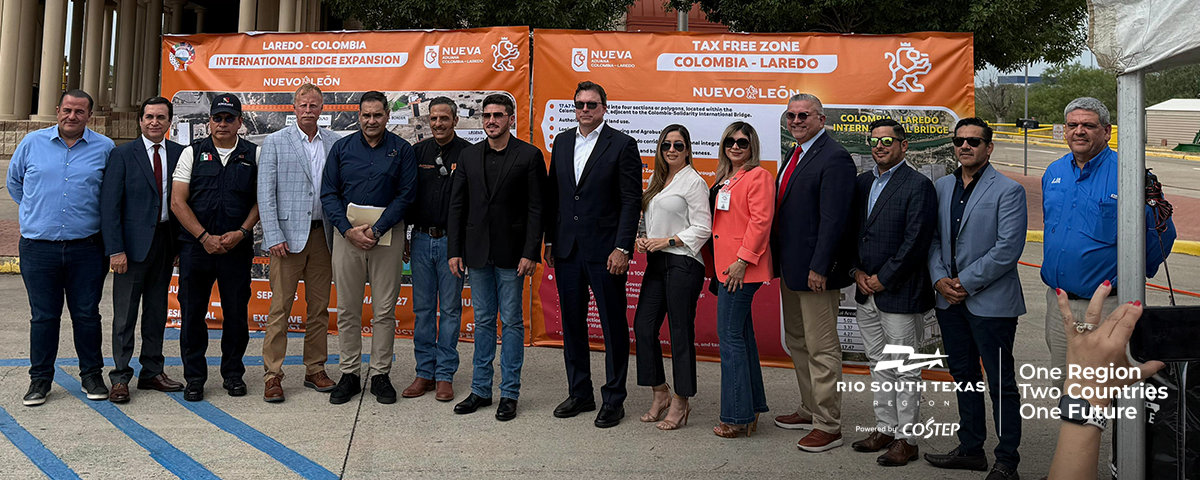
Expanded border infrastructure, a new industrial hub, and freight corridors aim to prepare Nuevo León and Texas for continued trade growth.
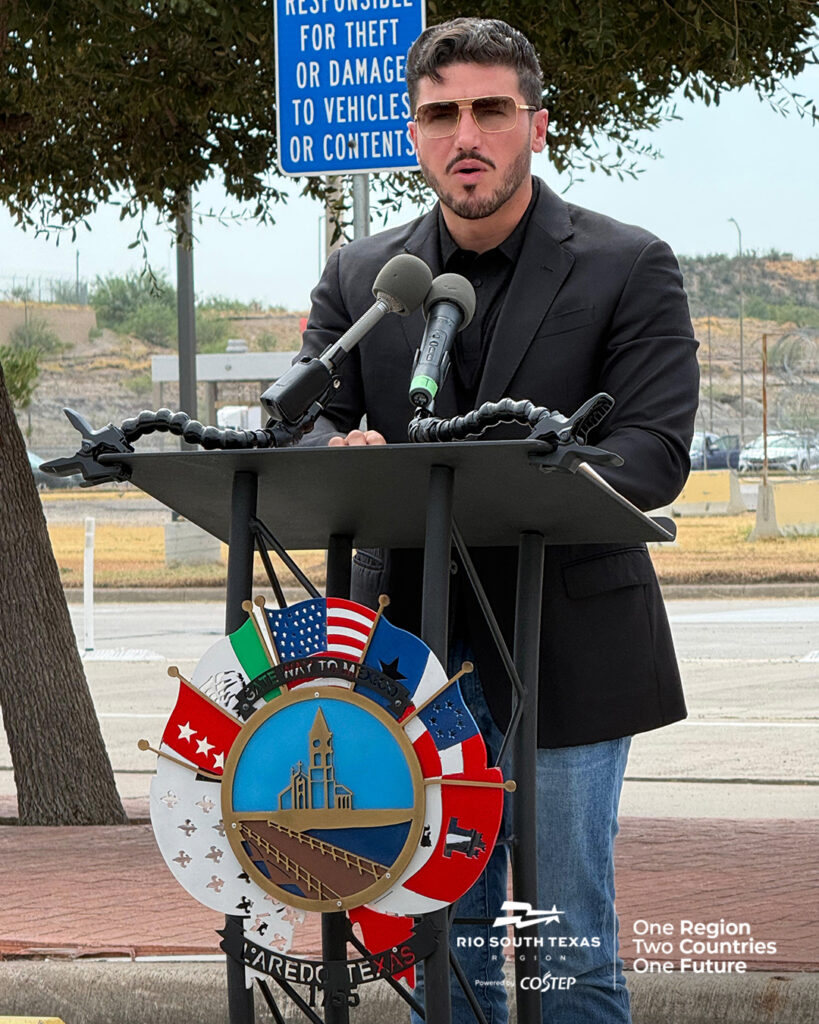
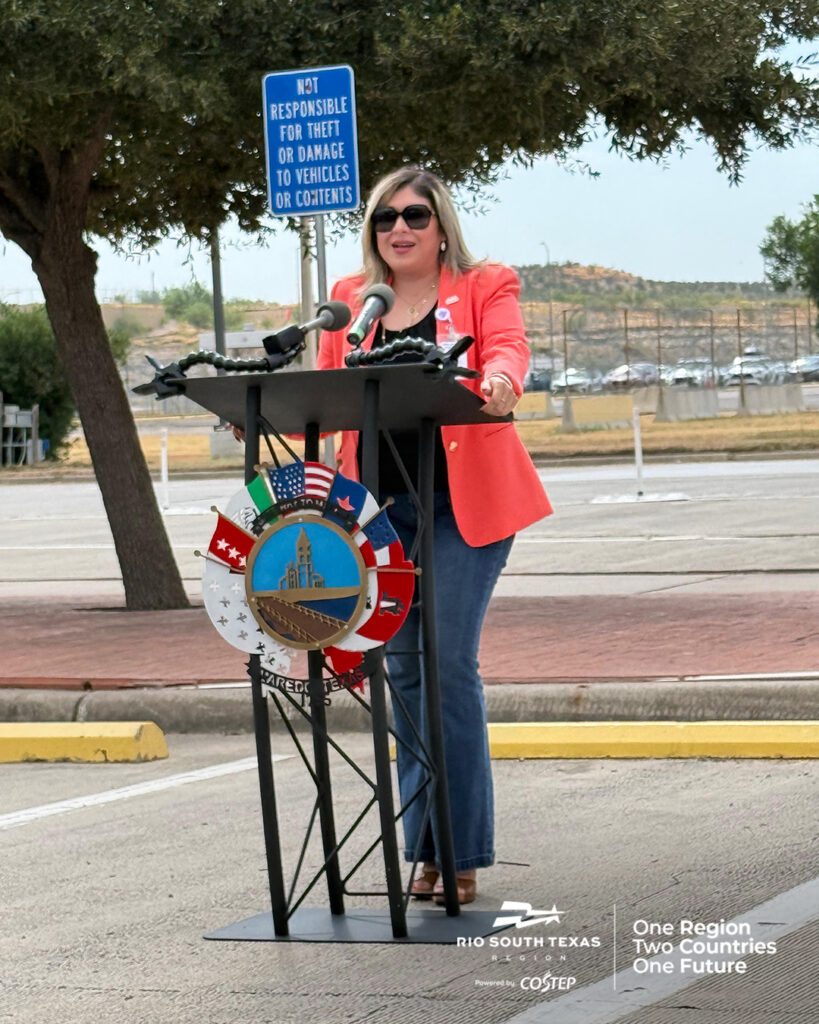
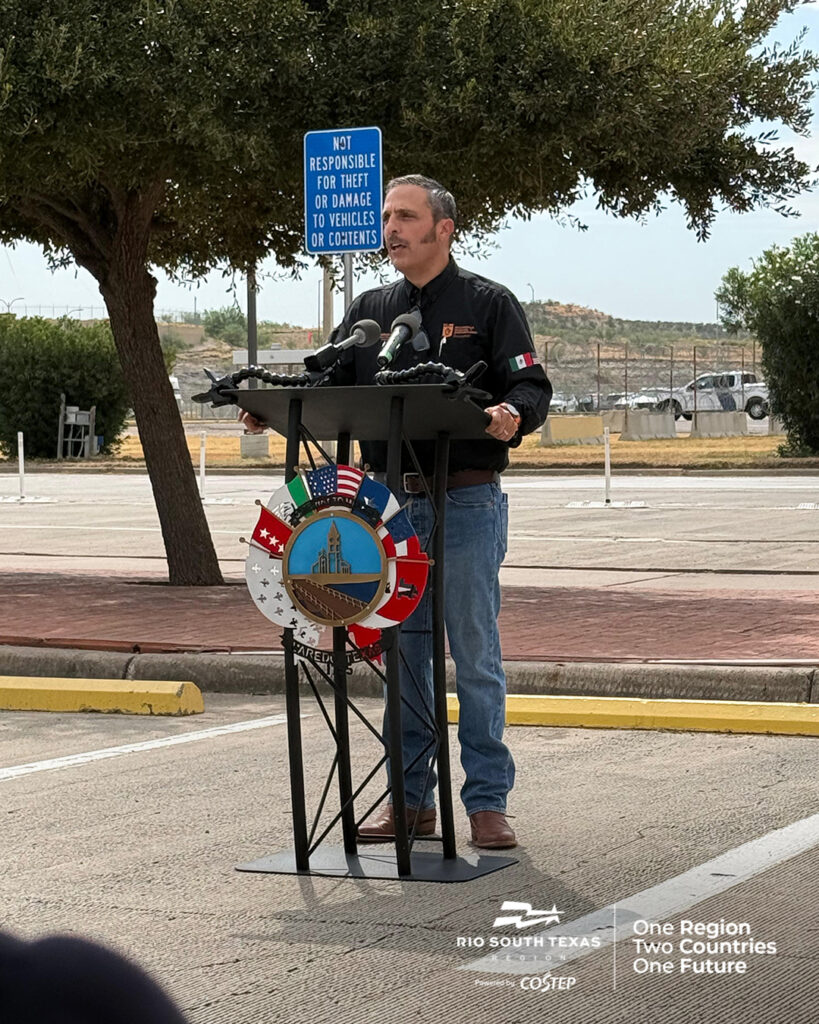
The connection between Nuevo León and Texas could soon enter a new phase. During a press conference in Laredo, state officials and Webb County representatives presented a series of projects intended to expand the Colombia-Laredo crossing and strengthen the region’s economic integration.
The announcements include new international bridges, incentives to attract industrial investment, highway improvements, and an elevated freight corridor. Together, these initiatives are intended to prepare the border for the growth expected over the next several decades.
A Higher-Capacity Port of Entry
The modernization of the Colombia Port of Entry has doubled its number of commercial traffic lanes from seven to 14.
According to Nuevo León Governor Samuel García Sepúlveda, traffic through the crossing has grown significantly and could reach its maximum capacity by 2030, with as many as 15,000 crossings per day.
In response to this projection, Nuevo León and Texas are preparing to build two additional international bridges between Colombia and Laredo: one for loaded commercial vehicles and another for empty trucks.
The estimated investment is $200 million, to be funded equally by both sides. Under the announced schedule, construction would begin in May 2027 and be completed in 2028.
The objective is to expand the infrastructure before demand reaches the point of saturation.
A New Industrial Hub in Anáhuac–Colombia
The second component of the strategy is the Anáhuac–Colombia Industrial Development Hub, one of two development zones selected by Nuevo León as part of Mexico’s national Plan México initiative.
The project seeks to attract logistics, transfer, manufacturing, and assembly companies through federal, state, and municipal tax incentives. According to the announcement, companies established in the area could qualify for exemptions from income, payroll, and property taxes, along with mechanisms for refunding indirect taxes associated with their operations.
Its location would allow companies to conduct manufacturing or logistics operations near the border and return to the United States through Laredo without traveling to the Monterrey metropolitan area.
The proposal coincides with industrial growth already taking place on the Texas side, including new warehouses, housing, road construction, and the expansion of Texas State Highway 255.
Green Corridors and a New Freight Route
Another project announced is Green Corridors, an elevated viaduct that would connect the Salinas Victoria Interport with Laredo.
Presented as a bonded freight corridor for the direct movement of goods, the initiative calls for an estimated private investment of $17 billion. Its route would run parallel to Highway 1 North, passing through Salinas Victoria, Bustamante, Lampazos, and Anáhuac before reaching the border crossing.
The project would also include a privately operated international bridge developed through a public-private partnership. The Nuevo León government would provide the corresponding right of way, while private investors would finance and operate the infrastructure.
If all the announced projects move forward as planned, the Colombia-Laredo area would eventually have four bridges: the existing crossing, the two new bridges promoted by Nuevo León and Webb County, and the Green Corridors bridge.
Two Routes Connecting Nuevo León to the Border
The strategy also includes the comprehensive expansion and modernization of Highway 1 North.
Twenty-five kilometers toward Salinas Victoria have already been improved. The announced goal is to modernize the entire route from that municipality to the Colombia Port of Entry by 2028, adding capacity, shoulders, and improved safety conditions.
Nuevo León would consequently have two major routes connecting the state to the border:
- The La Gloria-Colombia Highway.
- An expanded and modernized Highway 1 North.
These projects are complemented by a new highway connecting El Carmen, Salinas Victoria, and the Valle de las Salinas, an area that accounts for a growing share of Nuevo León’s industrial activity.
An Increasingly Integrated Economic Region
The projects are part of a broader vision for economic integration between Nuevo León and Texas. The proposed “economic diamond” would connect Monterrey with Laredo, Houston, Brownsville, Austin, and San Antonio.
The rationale behind this strategy is clear: Nuevo León’s industrial growth increasingly depends on border infrastructure capable of moving goods quickly, reliably, and safely. At the same time, Texas continues to position itself as a leading destination for investments associated with the relocation of North American supply chains.
Expanding the Colombia-Laredo crossing is about more than infrastructure. It is an effort to build a regional trade, manufacturing, and logistics platform capable of competing globally.
The challenge now is to turn the announcements into completed projects, coordinate authorities in both countries, and ensure that infrastructure development keeps pace with investment.
For South Texas and northern Mexico, what happens at Colombia–Laredo will be consequential. An important part of the region’s economic future is being shaped at this border crossing.